ARTIFICIAL INTELLIGENCE
Top-Tier Online Master’s in AI Engineering 2026: Quantic MSAIE


In 2026, the question isn’t whether AI will reshape roles; it’s whether you can engineer AI into production. A McKinsey report finds that 72% of organizations have already adopted AI in at least one function, making hands-on capability a career differentiator. If you’re evaluating a top-tier online master’s in AI Engineering, you’re really evaluating readiness for the AI economy.
Yet many online degrees over-index on lectures and theory, leaving graduates unsure how to ship: testing, CI/CD, architecture, and responsible deployment. That’s the practical gap an accredited program should close, especially for working professionals who need a mobile-first experience that fits real schedules. This article introduces Quantic’s 13-month online Master of Science in AI Engineering (MSAIE), and explains how its Active Learning approach and global network are positioned for the demands of the AI era.
Table of Contents
- Top-Tier Online Master’s in AI Engineering: Building the AI Economy
- Top-Tier Online Master’s in AI Engineering: Learn to Engineer Intelligence
- Top-Tier Online Master’s in AI Engineering: Technology is Pedagogy
- Top-Tier Online Master’s in AI Engineering: A Network for Life
- Top-Tier Online Master’s in AI Engineering: Advancement, Accelerated
- FAQ About The Top-Tier Online Master’s in AI Engineering
- Takeaway: Choosing a Top-Tier Online Master’s in AI Engineering
Top-Tier Online Master’s in AI Engineering: Building the AI Economy
So what does “AI-ready” actually look like for a working technologist in 2026? Go from a technology generalist to an AI engineer in 13 months. The online MSAIE from Quantic School of Business and Technology equips modern tech professionals to design, deploy, and orchestrate advanced systems built on today’s most powerful AI models and the frontier capabilities ahead. As an accredited, mobile-first program built for the AI era, this top-tier online master’s in AI Engineering pairs flexible, asynchronous coursework with real-world projects, preparing you to step into a pivotal role at the center of the AI economy.
Builders of the AI Economy
The Quantic MSAIE program is tailored for recent graduates and career shifters who want a credible on-ramp into AI engineering, without losing sight of what employers value in the AI economy. Candidates complete a required foundational module to build the core skills needed to succeed, then move into a program centered on designing, deploying, and integrating systems powered by advanced AI models. It’s a pragmatic setup for the AI era: build a strong baseline, then level up into applied engineering work.
Learn to Engineer Intelligence
Advance your capabilities with targeted training in AI systems engineering, foundation model integration, agentic workflows, and scalable intelligent infrastructure. Because leading in the AI economy requires more than model familiarity, the program also emphasizes the product-and-platform reality of AI adoption, including how technical choices affect reliability and delivery. And while we’ll go deeper later, Quantic’s global network and career support are designed to help you apply what you’re learning in real organizations. You’ll also see Quantic’s Active Learning approach unpacked in a dedicated section later.
Capstone: AI in Action
The MSAIE capstone challenges you to design and deliver an end-to-end AI system. Over five months, you’ll work in an agile team of exceptional peers to build, evaluate, and deploy a functional solution powered by advanced AI models as part of the broader 13-month online MSAIE. Your final project is showcased through a real-world demonstration, so you graduate with a concrete, shareable example of how you approach AI engineering decisions and delivery.
In a fast-moving AI economy, the advantage goes to those who can turn AI capability into real systems and business value. That’s the promise of a top-tier online master’s in AI Engineering, and it’s a promise built on a practical, forward-looking curriculum. Next, we’ll look at exactly what you will learn in the online MSAIE and how its core subjects map to the skills teams need to ship AI responsibly.
Top-Tier Online Master’s in AI Engineering: Learn to Engineer Intelligence

Now that you’ve seen how the online MSAIE is designed to help you create value in the AI economy, the next question is simple: what will you actually learn? Quantic’s MSAIE at Quantic School of Business and Technology focuses on building the skill set to engineer AI systems, not just experiment with them. Through projects that integrate advanced models, AI-based applications, and agentic workflows, you’ll learn how to translate real business requirements into solutions that can ship. It’s an accredited program built for the AI era, with a mobile-first experience that lets you keep momentum while you build production-ready capability.
What’s in the Core Curriculum for AI Engineering?
The core curriculum is where AI engineering starts to feel real. It covers the technical and delivery foundations that matter when AI moves from a demo to a system a team can maintain, monitor, and improve. In the AI economy, that “last mile” work is often where value is created or lost. Topics include:
- Managing AI engineering work: scoping, prioritization, and delivery practices that fit modern AI teams
- Web application and interface design: building usable surfaces for AI features, not just back-end prototypes
- Software testing and CI/CD: quality, release discipline, and repeatable deployment in the AI era
- AI engineering techniques and architectures: patterns for designing and scaling AI applications, agents and multi-agent systems
- Software design, architecture, and microservices architectures: scalable structure for fast-changing products
- Machine learning to AI model fine-tuning: the practical bridge from ML fundamentals to model adaptation
- AI and organizational transformation: how AI changes workflows, ownership, and operating models across the business
Which MSAIE Specializations Can You Choose, and Why Do They Matter?
The AI era rewards range, but it also rewards focus. Specializations let you steer the degree toward the kind of AI engineer you want to become, based on the systems you’ll build and the stakeholders you’ll support. Options include:
- Cloud Applications and Architectures: for engineers designing scalable intelligent infrastructure in production environments
- Communicating with Data: for roles where clear analysis, measurement, and narrative drive adoption
- Mathematics for AI Engineering: for strengthening the quantitative foundation behind modeling and evaluation decisions
- Leading Organizations: for professionals aiming to guide teams and drive AI initiatives across functions
- Blockchain: for builders exploring how emerging architectures intersect with AI-enabled products.
And while we’ll cover it more later, the program’s global network can add a useful perspective as you choose a direction and pressure-test it against real industry needs.
What Is the Capstone Project, and What Will You Deliver?
The capstone is where the pieces come together into an end-to-end build. Over five months, you’ll work in an agile team to design, evaluate, and deploy a functional AI system powered by advanced models, with a clear emphasis on real delivery. Your work is showcased through:
- A real-world demonstration: a practical way to communicate what you built and why it matters
For many students, it becomes a credible portfolio anchor for the AI economy, especially when paired with the program’s accredited credential and mobile-first flexibility.
A top-tier online master’s in AI Engineering delivers both breadth across modern AI systems and the ability to build an end-to-end solution you can stand behind. But a world-class curriculum is only as good as the method used to teach it. Next, we’ll shift from “what you learn” to “how you learn it” by unpacking Quantic’s Active Learning approach and why it’s so effective.
Top-Tier Online Master’s in AI Engineering: Technology is Pedagogy
Curriculum defines what you’ll learn, but pedagogy determines whether you can learn it better and faster in the AI era. In the online MSAIE from Quantic School of Business and Technology, the learning experience is built around Active Learning: short, interactive lessons designed for recall, application, and momentum. For a top-tier online master’s in AI Engineering, that matters because the AI era rewards builders who learn fast and ship reliably.
How does Active Learning improve real skill-building in the AI era?
Active Learning is designed for transfer, not trivia. Instead of passively watching lectures, you practice decisions and get rapid feedback, which better matches how AI engineers work in the real world. Research backs the approach: a large meta-analysis in PNAS (Freeman et al.) found active learning improves performance and reduces failure rates in STEM courses. In the AI economy, that advantage compounds because your output depends on how quickly you can turn new concepts into working systems.
- Practice-first lessons: learn by doing, not just reading
- Feedback loops: spot gaps early and correct them fast
- Application mindset: connect concepts to building, testing, and delivery
What makes Quantic’s mobile-first, AI-era platform different?
Quantic’s method is delivered through a mobile-first learning experience built for working professionals. The platform supports mastery-based progression, meaning you move forward by proving you understand each concept, not by sitting through long videos or pages of prose. Lessons are short (often 5-10 minutes), highly interactive, and intentionally cumulative – each one builds on prior material and requires frequent check-ins to advance.
That constant testing helps you spot gaps early while you’re still in the flow, so learning stays durable as the material gets harder. It is also positioned as an AI-era learning platform, designed to keep the pace high and the friction low, which is hard to do in traditional online formats. And because Quantic is accredited, you get the structure and credibility many employers still require.
- Micro-lessons that fit real schedules: learn in focused bursts without breaking your week
- Mastery-based progression: frequent interactions and checkpoints to move forward, with each lesson building on the last
- Community and global network: stay connected to peers who raise your standards
In the AI era, learning speed and retention are competitive advantages. A top-tier online master’s in AI Engineering must be engineered for outcomes, not just passive content. But individual learning is only half the equation. Next, we’ll look beyond the classroom experience to the relationships that shape careers, and why Quantic’s global network is a force multiplier.
Top-Tier Online Master’s in AI Engineering: A Network for Life
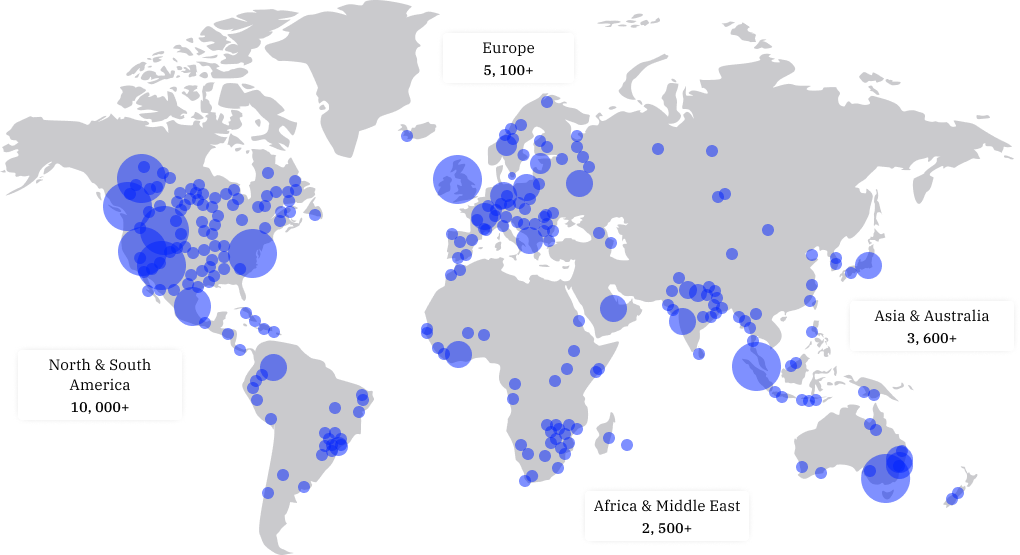
That “force multiplier” is not theoretical, it’s the people you learn with and keep learning from. Quantic’s global network is built into the student experience, connecting you with motivated peers across the AI economy in a community of 19,000+ students and alumni spanning 150+ countries. For a top-tier online master’s in AI Engineering, that community can shape both your trajectory and your opportunities.
Who are Quantic students, and why does selective admissions matter?
In the AI era, your peers become your benchmark. Quantic is selective by design, so the conversation stays practical and high-signal: what’s working, what’s shipping, and what breaks in production. You will strategize, collaborate, present, and gain real-world experience while forming meaningful relationships.
Quantic offers a cohort-based experience where you learn alongside other motivated, high-achieving peers from prestigious universities such as Oxford, UC Berkeley, Harvard, MIT, and Stanford, as well as from the world’s leading companies like Google, Amazon, Microsoft, Salesforce, Apple, and JPMorgan Chase & Co.
That mix raises the baseline for both rigor and ambition, which matters in the AI economy because strong peers accelerate your judgment, not just your knowledge. In an accredited program, the credential opens doors, but the cohort can help you walk through them with confidence.
- High-caliber peer feedback: pressure-test ideas, architectures, and tradeoffs with classmates who take building seriously
- Cross-functional perspective: learn how engineers, product leaders, and operators evaluate real constraints
A global network you can call on: sanity checks, intros, and collaboration when you hit a career inflection point

How do Quantic Global Events turn online connections into real relationships?
A network becomes durable when it moves beyond chat threads. Quantic’s global events are designed to bring students and alumni together through conferences in cities like Miami, Bangkok, Lisbon, Dublin, Barcelona, and Dubai, as well as meet-ups in major hubs worldwide and community-led clubs and organizations. It complements a mobile-first learning format by creating in-person touchpoints where trust forms faster, ideas travel further, and collaborations actually start. In the AI economy, those relationships can translate into partnerships, referrals, and insight you will not get from coursework alone.
- Global conferences: connect Quantic students and alumni in cities worldwide for weekend events with case studies, workshops, keynote speakers, networking, and local excursions
- Local meet-ups: connect and build relationships through dozens of in-person and interest-based meet-ups in cities around the world
- Noteworthy speakers and workshops: exposure to real operators and current playbooks from the AI era
- Student-led clubs and community groups: smaller circles that make the global network feel personal and actionable
A top-tier online master’s in AI Engineering is stronger when the learning extends into a real community, one that challenges your thinking and expands your options long after graduation. Next, we’ll zoom in on outcomes with “Advancement, Accelerated,” including how Quantic supports career growth in the AI economy.
Top-Tier Online Master’s in AI Engineering: Advancement, Accelerated
A global network can open doors, and “outcomes” show what happens after you walk through them. This section looks at Quantic’s track record for learner satisfaction and career impact, and what that signals for the online MSAIE. For a top-tier online master’s in AI Engineering, results matter in the AI economy.
What proof supports Quantic’s learning efficacy in the AI era?
In the AI era, “effective” learning is measurable: do students stay engaged, retain skills, and apply concepts under pressure? Quantic School of Business and Technology pairs a mobile-first platform with Active Learning, and the evidence is not just internal satisfaction metrics. Independent research has benchmarked Quantic against both elite MBA classrooms and major online learning platforms, showing comparable or stronger performance with faster mastery and better retention.
- Independent benchmarking vs top MBAs: A study by Stanford researchers compared Quantic learners with students from top global business schools (including Harvard and Wharton) and found Quantic students performed as well or better in core subjects like Accounting and Finance, while mastering material faster and retaining it better.
- Outperforms major learning platforms: A 2017 study found Quantic learners mastered Probability and Statistics in about one-third of the time versus platforms such as edX and Khan Academy, with higher engagement and exam performance, and competitors were five times more likely to score below 50%.

What career outcomes can you expect from an accredited program like Quantic?
In the AI economy, a credential only matters if it helps you move. As an accredited institution, Quantic School of Business and Technology brings the online MSAIE into an ecosystem with a documented track record of learner satisfaction and career impact across its MBA and EMBA programs, plus third-party ratings and global recognition.
- Career impact: 94% of graduates say they achieved their career goals, 52% report a promotion within 6 months, and graduates see a 22% median salary increase within 6 months of graduation.
- Satisfaction that supports persistence: 61 NPS (higher than Wharton’s 51 and Harvard’s 41), 99% positive lesson rating, and 97% of students saying they would recommend Quantic to a friend.
- Third-party ratings and reviews: Trustpilot (4.8), Niche (4.8), Mastersportal (4.8), and EduOpinions (4.7), plus a 4.9 rating on both Apple App Store and Google Play.
- Awards and recognition: Featured by the Financial Times, a Fast Company 2020 World Changing Ideas Awardee, and a 2024 EdTech Trendsetter Awards Finalist.


What do Quantic students and alumni say in reviews and testimonials?
Stats can signal quality, but lived experience adds clarity. To gauge fit for the online MSAIE, it helps to hear how learners describe Quantic’s mobile-first, Active Learning experience and the value of its global network. You can explore highly rated reviews on Trustpilot, Niche, and Mastersportal, then go deeper through student stories or by connecting with students and alumni on LinkedIn for candid, first-hand perspectives.
Quantic has done to education what Apple did to the mobile phone… This is the future of education! – Richard Whitehead (Head of Product Marketing, Adobe)
I could learn anywhere, despite my busy schedule… networked with people all over the world. – Catie Marolt (Senior Release Train Engineer, Bank of America)
As a tech person, I fell in love with the Quantic app… how interactive it was. – Richard Lim (Technical Architect, Salesforce)
Highly engaging content delivered thoughtfully and in an interactive way. – Tom Garvey (Manager, Strategy & Operations, Google)
Quantic helped me further my goals… more confident. – Rosanna Iancau (Director of People Development, L’Oréal USA)
Taken together, Quantic’s pedagogically engineered learning model and its broader outcomes record show what the platform can deliver when learning is designed for application. If you are comparing a top-tier online master’s in AI Engineering, the next step is to evaluate fit, curriculum, and support. Below, we answer the most common questions.
FAQ About The Top-Tier Online Master’s in AI Engineering
If the outcomes section gave you the “why,” these FAQs focus on the “how.” Below are the key factors for selecting an online MSAIE in the AI era, including curriculum fit, learning design, credibility, and the global network that can help you compound results over time.
A top-tier online master’s in AI Engineering should map directly to what teams need to ship in the AI economy: reliable systems, disciplined delivery, and responsible deployment. As you compare options, look for an accredited program with an applied curriculum, an effective learning model, and a community that keeps standards high.
✅ Accredited credibility: verify recognized accreditation and clear program governance
✅ AI engineering, not just ML: systems design, testing, CI/CD, and production patterns
✅ Active learning and mobile-first fit: short, interactive lessons that support retention and consistency
✅ Portfolio outputs: capstone artifacts you can show, explain, and defend
✅ Global network: peers who can pressure-test decisions across industries and regions
*****
Yes, Quantic School of Business and Technology is licensed by the District of Columbia Higher Education Licensure Commission in Washington, DC, and accredited by the Distance Education Accrediting Commission (DEAC). The DEAC is listed by the United States Department of Education as a recognized accrediting agency and is also recognized by the Council for Higher Education Accreditation (CHEA). This ensures Quantic meets rigorous academic and professional standards.
*****
Quantic’s platform uses Active Learning and mastery-based progression, delivered in short, interactive lessons designed for recall and application. The mobile-first format helps busy professionals maintain momentum without long lecture blocks. In practice, you spend more time making decisions, checking understanding, and correcting gaps early.
*****
The Quantic MSAIE capstone is designed around delivery: you work in an agile team to design, evaluate, and deploy an end-to-end AI system, then present tangible artifacts such as a GitHub repository and a real demonstration. That output can function as a portfolio anchor when you are interviewing for roles in the AI economy.
*****
A global network matters when it changes your speed and your options. Quantic’s community connects you with peers across the AI economy, which can improve your judgment through better feedback and broaden opportunities through relationships. For many learners, that network becomes a durable advantage beyond the coursework.
*****
The best program choice becomes clearer when you evaluate fit across curriculum, learning design, credibility, and community. If you are comparing a top-tier online master’s in AI Engineering, use the criteria above to pressure-test what you will build and who you will learn with.
Takeaway: Choosing a Top-Tier Online Master’s in AI Engineering
A top-tier online master’s in AI Engineering should be built for the realities of the AI economy: shipping reliable systems, iterating fast, and deploying responsibly. The online MSAIE from Quantic School of Business and Technology combines an accredited foundation with active learning, a mobile-first experience, and a global network designed to help you build capability that carries through the AI era.
- AI economy readiness: Build practical engineering judgment across scoping, architecture, testing, CI/CD, and deployment, so you can move from demos to durable systems.
- Active learning advantage: Learn through short, interactive practice and feedback loops that improve retention and transfer, which matters when tools and models change quickly.
- Mobile-first consistency: Keep momentum with lessons designed for real schedules, helping working professionals progress steadily without relying on long lectures or fixed class times.
- Accredited credibility: Choose an accredited program to signal rigor and governance, supporting employer confidence while you transition into AI engineering responsibilities.
- Capstone proof-of-work: Graduate with an end-to-end build you can explain and defend, plus artifacts that strengthen interviews and portfolio conversations.
- Global network leverage: Learn with peers across industries and geographies, then keep learning from that community as your role evolves throughout the AI era.
Take the Next Step in the AI Economy
If you are seeking a top-tier online master’s in AI Engineering, apply now to Quantic’s online MSAIE to start building real AI systems. Not sure yet? Explore admissions criteria and key dates, or contact our Admissions team at [email protected] to schedule a 1:1 video chat and discuss fit.
More on the Quantic Blog:
- What is The Best Online EMBA: Highly-Rated Programs FAQ
- Quantic: The Highly Selective, Mobile-First Business School
- An Online MBA with Real-World Connectivity? Yes.
- The Future of Online MBA: How Digital Learning Rivals Classroom
- The Best Online MBA Recognized By Top Employers: Quantic MBA
- What is The Best Affordable Online EMBA: Top Programs 2025
- Is An Online MBA Worth It In 2025: Drawbacks vs ROI
- What is The Best Online EMBA: Highly-Rated Programs 2025
- MBA vs Executive MBA: Which Fits Your Career Growth at 30?
- Quantic Review: Best Accelerated Online MBA for Career Growth
- Affordable MBA: A Flexible, Top-Tier Education That’s AI-Powered
- Is an MBA Worth It in the Age of AI? Facts & Insights 2025
- Quantic MBA Review: Curriculum, Admissions, Pros & Cons
- What is the Best Online MBA Program? Quantic Review Insights
- Quantic School Reviews: What Our Graduates Are Saying
- Quantic Review: Executive MBA vs MBA – What is Right for You
- Quantic Executive MBA Review: Benefits, Features & Outcomes
- Is Quantic’s MBA worth it: Real Student Reviews and Outcomes
- Quantic Reviews: Hearing Directly From Students and Alumni
- MSBA vs MBA – The Difference Explained. Which One is Better?


